


Does Online Therapy Work?
Online therapy has become a popular way to access mental health support, offering flexibility and convenience from home. World Psychiatry journal found that therapist-supported internet-based cognitive behavioral therapy produced similar effects to in-person CBT across several psychiatric and physical health conditions.
Online therapy can include video sessions, messaging, or other forms of communication, depending on the provider and treatment plan. It may also make care easier to access for people who face barriers to in-person treatment. Understanding how online therapy works, what the research shows, and the potential benefits of therapy can help you decide whether this approach fits your needs.
What is Online Therapy?
Online therapy is exactly what it sounds like: telehealth therapy appointments between you and your therapist that are conducted online. Though many people think of it as new, in reality, online therapy has been around for decades.
Also known as online counseling, virtual therapy, teletherapy, and telepsychology, online therapy has seen a huge uptick in interest in the last couple of years. Demand for quick, easy, and convenient therapy options has made it a common way for people to get help addressing mental health conditions and needs. People searching for mental health help and looking for increased accessibility and affordability have furthered its popularity.
While there have been some questions about how effective online therapy is, research continues to support it as a useful way to access mental health care. For people considering whether it’s the right fit, understanding the pros and cons of online vs. traditional therapy can help them make a more informed choice.
Does Research Prove Online Therapy is Effective?
Studies suggest that online therapy can help people improve their mental health, including when therapy is delivered through text messages. In a 2025 randomized clinical trial published in JAMA Network Open involving adults with depression, both message-based and video-based psychotherapy were linked to improvements in symptoms and daily functioning over 12 weeks. The study found no meaningful difference in outcomes between the two formats.
Research has also looked at whether therapy delivered through text can be helpful. A study published in Telemedicine and e-Health followed 57 adults who received text-based therapy for 15 weeks. Participants reported improvements in their mental health symptoms, and 46% experienced a level of improvement the researchers considered clinically significant.
These studies don't mean online therapy works equally well for everyone. However, they show that therapy delivered online, including through messaging and video, can be a useful way to access professional mental health care.
“Online therapy is really the same as in-person therapy; it’s just conducted via a digital platform instead of in an office. Digital mental health platforms where you can talk to a therapist from your phone — any time, anywhere — is truly meeting people where they are, which is a cornerstone of therapeutic work.”
- Talkspace therapist, Kate Rosenblatt, MA, LPC, LMHC
How Does Online Therapy Work?
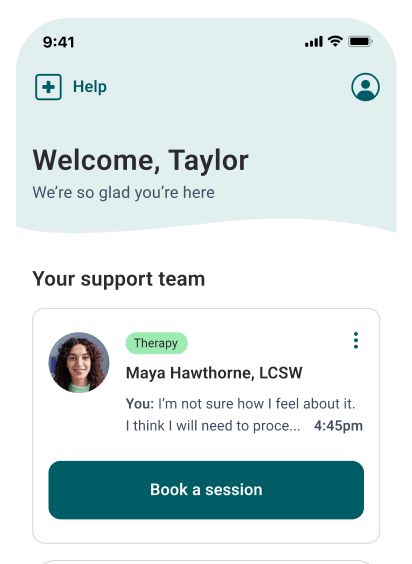
Online therapy works by allowing people to make and attend appointments with a therapist in a virtual manner. By connecting through your smartphone, computer, or tablet, you gain all the benefits therapy has to offer without having to physically be in the same room as your therapist.
Today, many therapists offer online therapy sessions, even through private practice. Online platforms like Talkspace also offer subscription-based therapy services and options, making therapy potentially even more affordable. Additionally, online therapy is a quickly accessible way to get help for a mental health condition.
What are the Pros and Cons of Online Therapy?
Just like anything else, there are pros and cons to online therapy. Evaluating both sides can help you better determine if an online therapy service is something you want to pursue. It’ll help you answer the question: Is online therapy effective for my needs?
“One unique benefit of online therapy that I see is that you can see your therapist from the comfort and convenience of your home. You don’t have to take time out of your very busy day to commute to a therapy session; instead, online therapy fits into your life. And it’s often much more affordable than in-person therapy”
- Talkspace therapist Kate Rosenblatt, MA, LPC, LMHC
Pros
Of the many benefits online therapy offers, perhaps one of the greatest is its convenience. Online therapy means the distance to a therapist is no longer a factor in receiving care.
Other pros include:
- If privacy is a concern, many online sites allow you to use a nickname.
- Even those in rural areas can have easier access to therapy.
- Transportation issues are no longer a concern.
- No commute or traffic concerns with a video session.
- Cost may be much cheaper compared to in-person treatment.
- Convenient and flexible scheduling options, so you can book an online session when you need one.
- No need to worry about others seeing you at the appointment.
- If you’re embarrassed about what you’re seeking therapy for, there may be some comfort in not having to be face-to-face with a therapist.
- Especially for those with social anxiety, online options can be extremely helpful.
“For people struggling with anxiety, online therapy can help us learn some crucial skills to both manage and decrease their anxiety symptoms. Imagine having a better handle on symptoms like rumination, or trouble sleeping? It can make a world of a difference.”
- Talkspace therapist, Kate Rosenblatt, MA, LPC, LMHC
Cons
Of course, there are drawbacks to most things, and online therapy is no different. For example, online therapy may not be suitable for those with mental health challenges like active suicidal ideation, self-harm practices, or psychosis. Other times that online counseling may not be as effective include:
- Lack of body language and cues might make diagnoses difficult for some therapists.
- Technological issues can be problematic, including Internet issues, dropped calls, or frozen screens that can interrupt a video session.
- Therapists who aren’t as tech-savvy may have issues conducting productive sessions.
- Some people may find it difficult to bond and connect with their therapist when meeting virtually.
- Potential for sessions to be interrupted by children, pets, visitors, or other at-home distractions.
- May not be as engaging for younger children or adolescents.
- In the event of an extreme crisis, it may be more difficult for a therapist to intervene./
So, does online therapy work? At the end of the day, it really just depends on your needs, your goals, and your comfort zone. Online therapy can be an amazing way to comfortably confront your mental health challenges and work on yourself. For many people, it’s exactly what they’ve been looking for to become a happier, healthier version of themselves.
Online therapy can help with some of the following conditions:
- Anxiety disorder
- Depression and other mood disorders
- Post traumatic stress disorder (PTSD)
- Eating disorders
- Substance abuse
- Panic disorder
Mental health care is important, and there are many options for finding a virtual therapist or counselor for the best treatment.
Why Choose Talkspace for Online Therapy?
If you think online therapy might be right for you and you’re ready to get started, you should first look for a therapist who offers online appointments. Talkspace makes it easier to access online therapy with a licensed therapist without commuting or waiting for an in-person appointment.
You can complete a short assessment to help you find a provider, then communicate through live video sessions, messaging, or both, depending on your plan. Talkspace also works with many major insurance plans, with self-pay options available. If you’re ready to see whether online therapy is right for you, get started with Talkspace. You can check your insurance eligibility, find a licensed provider, and begin therapy from the convenience of your own device.
Frequently Asked Questions (FAQs)
Does online therapy work for anxiety and depression?
Yes, online therapy can help people manage anxiety and depression with support from a licensed therapist. Your therapist can help you understand your symptoms, develop coping skills, and work toward treatment goals.
Does online therapy work for long-term mental health care?
Yes, online therapy can be part of ongoing mental health care when regular support fits your needs. You and your therapist can review your progress and adjust your goals as your needs change.
Does online therapy work if you've never been to therapy before?
Yes, you don't need previous therapy experience to start online therapy. Your therapist can explain what to expect, help you identify your goals, and work with you at a pace that feels comfortable.
Does online therapy work for managing everyday stress?
Yes, online therapy can help you understand what's contributing to everyday stress and develop healthier ways to cope. A therapist can also help you work through challenges involving work, relationships, or major life changes.
Does online therapy work for relationship and family issues?
Yes, therapy can help you work through relationship and family concerns, including communication problems, conflict, and difficult emotions. You can use individual therapy to explore your role in these patterns and develop healthier ways to respond.
Sources
- Hedman-Lagerlöf E, Carlbring P, Svärdman F, Riper H, Cuijpers P, Andersson G. Therapist-supported Internet-based cognitive behaviour therapy yields similar effects as face-to-face therapy for psychiatric and somatic disorders: an updated systematic review and meta-analysis. World Psychiatry. https://pubmed.ncbi.nlm.nih.gov/37159350/. 2023 Jun;22(2):305-314.
- Pullmann MD, Rouvere J, Raue PJ, Griffith Fillipo IR, Mosser BA, Heagerty PJ, Fridling-Cook N, Padmanabhan A, Hull TD, Areán PA. Message-Based vs Video-Based Psychotherapy for Depression: A Randomized Clinical Trial. JAMA Netw Open. https://pubmed.ncbi.nlm.nih.gov/41165707/. 2025 Oct 1;8(10):e2540065.
- Hull TD, Mahan K. A Study of Asynchronous Mobile-Enabled SMS Text Psychotherapy. Telemedicine and e-Health. https://journals.sagepub.com/doi/abs/10.1089/tmj.2016.0114. 2017;23(3):240-247. doi:10.1089/tmj.2016.0114
Talkspace articles are written by experienced mental health-wellness contributors; they are grounded in scientific research and evidence-based practices. Articles are extensively reviewed by our team of clinical experts (therapists and psychiatrists of various specialties) to ensure content is accurate and on par with current industry standards.
Our goal at Talkspace is to provide the most up-to-date, valuable, and objective information on mental health-related topics in order to help readers make informed decisions.
Articles contain trusted third-party sources that are either directly linked to in the text or listed at the bottom to take readers directly to the source.