Emotionally focused therapy (EFT) online with Talkspace
Emotionally focused therapy (EFT) helps individuals, couples, or families improve communication skills, overcome conflict, and deepen their connection. EFT therapy teaches people to better recognize, accept, and manage their emotions to support their mental health and relationships.


Most insured members have a $0 copay
Choose your insurer to learn more:










Here's how it works

Check insurance coverage
See what you can save through your insurance plan.
Personalized match
Answer a few questions online and we'll match you with a licensed provider.
Start therapy
Communicate with your therapist through live sessions, messaging, or both.
Benefits of Talkspace

Eliminate commute time and scheduling hassles

No search for a therapist or long wait for an appointment

Seamlessly switch providers, at no extra cost

Receive affordable, high-quality mental health care
What emotion-focused therapy offers

More than 60,000
5-star reviews
Read why people love using Talkspace.
See all reviews








Any questions?
Find trust-worthy answers on all things mental health at Talkspace.
What is emotionally focused therapy and what is it used for?
Emotionally focused therapy (EFT) can help individuals, couples, or families embrace their emotions and use them to support positive change. EFT therapy is versatile and can be used in family therapy to help relationships, in couples therapy to address relationship conflict, and in individual therapy to address conditions such as depression, anxiety, and PTSD.
What techniques are used in EFT?
EFT uses techniques such as reframing, self-awareness building, emotional regulation, and validating one’s own emotional experience. The goal is to increase self-compassion and the ability to constructively manage emotions.
What is the difference between EFT and CBT?
EFT is an approach to individual and couples therapy that emphasizes identifying, accepting and transforming intense emotions, while CBT is an individual therapy approach that works to modify how people think about certain situations to improve how they feel.
What are the goals of EFT treatment?
EFT Therapy aims to help individuals, couples and families better identify, experience, accept, and manage their emotions. The emotion regulation skills taught in EFT therapy allow people to become more skillful in processing the personal insights their emotions provide so they can use that information to become more emotionally adaptive. In EFT sessions, participants are encouraged to face underlying emotions in order to better process and change them.
EFT couples therapy and family therapy techniques operationalize the principles of attachment theory to help people better accept, regulate, understand, and express their emotions. Understanding attachment needs in one’s self and in those we’ve formed emotional bonds with helps to strengthen intimate relationships.
How effective is EFT therapy?
EFT has been demonstrated to be effective in a variety of contexts, including individual and couples therapy. According to a study published in The Journal of Lifelong Learning in Psychiatry, 77% of people did not relapse into symptoms of depression. It also was found to be more effective at reducing interpersonal problems than CBT. Additionally, research shows that 90% of couples who partake in EFT experience significant improvements in their relationship.
Can I do emotionally focused therapy online?
Emotionally focused therapy can be done online, and many prefer it that way. With Talkspace online therapy, users can send unlimited written, video, and audio messages to their dedicated therapist in a secure chat room — from anywhere, at any time. Therapists respond daily on weekdays, and many choose to include weekends in their therapy schedules. You can also select the format that works for you, whether that's messaging or live sessions. Enjoy the same quality of care as you would in face-to-face therapy, but with the convenience and flexibility of typing and chatting with your provider in the Talkspace app.
Does insurance cover emotionally focused therapy?
If your insurance plan covers therapy, it may also cover emotionally focused therapy. More and more insurance plans are covering therapy or counseling, so check with your insurance company to confirm your coverage details for emotionally focused therapy. You can also check insurance availability with Talkspace.
Does Talkspace offer emotionally focused therapy?
Yes, some Talkspace therapists offer emotionally focused therapy in their practice. With Talkspace online therapy, users can send unlimited written, video, and audio messages to their dedicated therapists in a secure chat room. All plans come with unlimited messaging, and some include live video sessions for extra support. If needed, you also have the ability to change therapists or cancel your subscription at any time.
What happens in an emotion-focused therapy session?
An emotion-focused therapy session helps you identify and explore emotional patterns that may affect your relationships and well-being. Your therapist can guide you through recognizing underlying feelings, validating your emotional experiences, and developing healthier ways to express and manage emotions during each EFT session.
How long does emotionally focused therapy take?
Emotionally focused therapy is generally considered a short-term treatment approach, but the length of therapy varies from person to person. Your treatment duration may depend on your goals, the challenges you're addressing, whether you're participating in individual or couples therapy, and your progress throughout treatment.
Is emotion-focused therapy the same for individuals and couples?
No. While both are grounded in emotion-focused principles, individual emotion-focused therapy addresses a person’s emotional experiences and patterns, where couples therapy focuses on the emotional bond and interaction patterns between partners.


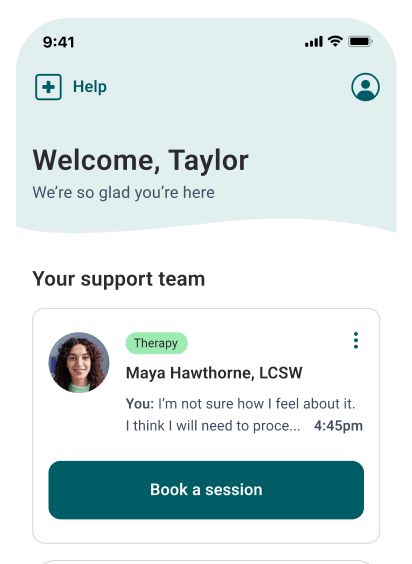
Download the app

If you are in a life threatening situation - don’t use this site. Call 988 or use these resources to get immediate help.